
Dog Collar Sizing by Weight Fails at the Boundaries — WildHawk's M/L/XL Chart, Explained for Resellers
Every pet-gear reseller eventually meets the same angry email: a customer bought "L" for a 24 kg dog and the collar is either loose or tight. The cause is rarely the collar. It is the sizing method — choosing by body weight, at a boundary where the weight chart cannot decide. This article explains where weight-based sizing fails, what to do instead, and how resellers can present sizing so it stops generating returns.
- Why a Dog Collar Weight Chart Fails at the Boundaries
- The Reliable Method: Measure Neck Girth at the Base
- Deep-Chested Breeds: German Shepherds, Dobermans and Sizing Traps
- How Resellers Present a Dog Collar Size Chart That Reduces Returns
- Get the WildHawk Size Chart for Your Listings
- Frequently Asked Questions
- Get the WildHawk Size Chart for Your Listings
Why a Dog Collar Weight Chart Fails at the Boundaries
Weight ranges are convenient but coarse. A typical chart for a tactical collar set looks like this:
| Size | Weight range | Boundary problem |
|---|---|---|
| M | 14–22 kg | At 22 kg, M and L overlap |
| L | 22–32 kg | At 25 kg, L and XL overlap |
| XL | 25–45 kg | Large breeds vary most in neck circumference |
Notice the two overlaps: a 22 kg dog sits in both M and L, a 25 kg dog sits in both L and XL. The M and L weight ranges overlap, and so do L and XL. When a dog falls in the overlap, size by neck girth at the base — not by weight. Weight is a filter; girth is the decision.
The Reliable Method: Measure Neck Girth at the Base
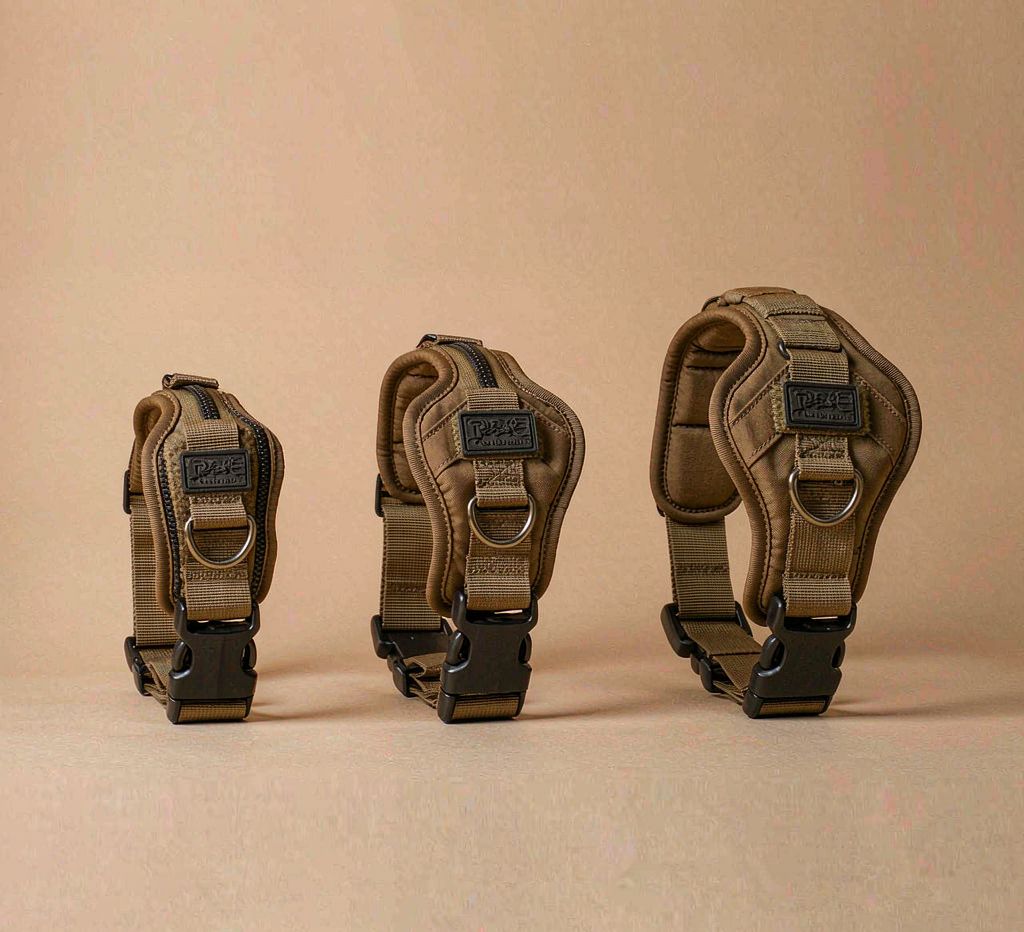
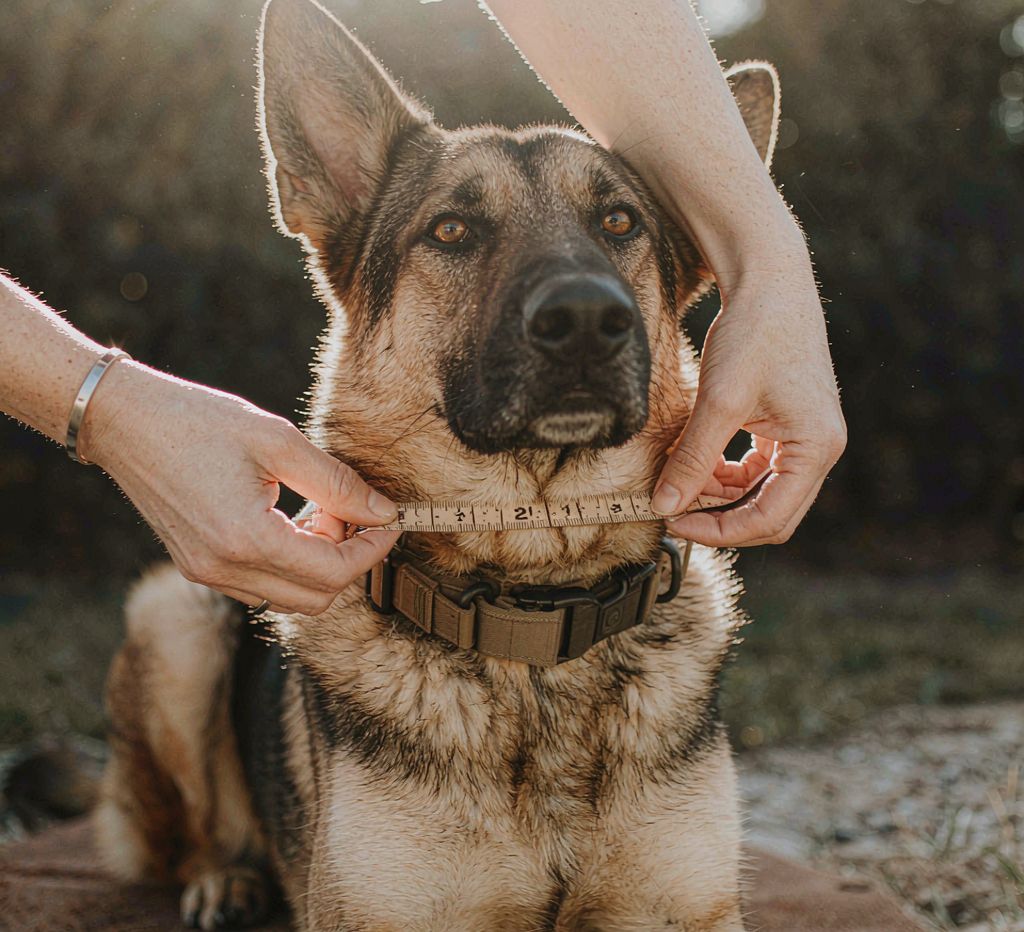
Measure with a soft tape at the base of the neck — where the collar actually sits, not mid-neck and not where a show handler measures. Add the adjustment margin recommended in the spec sheet, then match the girth to the collar's adjustable range rather than to the size letter.
One more practical rule: with a two-finger fit, the collar should slide but not rotate freely. A collar that rotates has too much clearance; a collar you cannot slide under will press on the throat when the dog pulls — even with a well-padded design.
Deep-Chested Breeds: German Shepherds, Dobermans and Sizing Traps
German Shepherds, Dobermans and other deep-chested breeds are exactly the dogs tactical gear is bought for, and exactly the dogs where weight charts mislead most. Their neck and chest proportions put many of them in the weight overlap zones — and their coat adds apparent girth that comes and goes with the seasons.
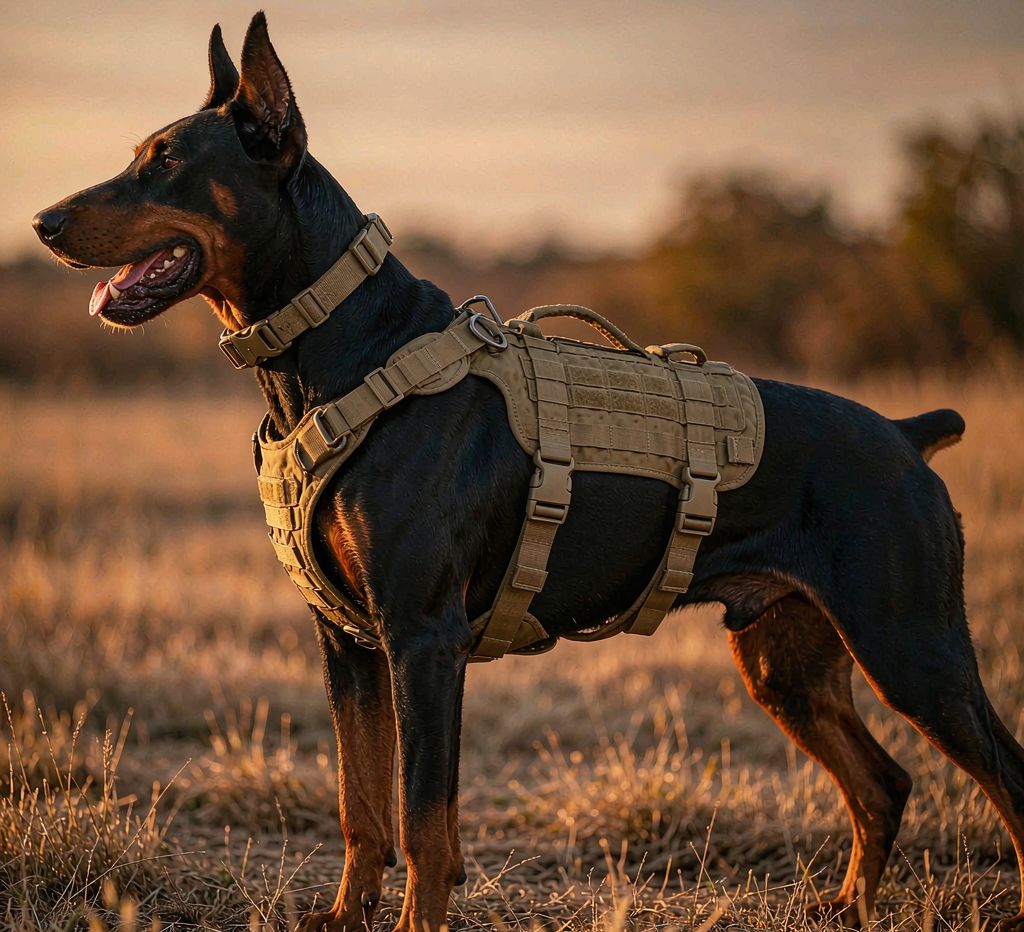
For these breeds, always resolve the size by girth measurement, and re-check after seasonal coat changes. If you sell into markets where these breeds dominate, keep the girth table visible in every listing.
How Resellers Present a Dog Collar Size Chart That Reduces Returns
Resellers who publish a better sizing method turn a support cost into a selling point. Four things to put in your own listing:
- Both tables, clearly separated — the weight chart as a first filter, the girth chart as the decider.
- The overlap called out — state in plain words that boundary cases are resolved by girth. Buyers trust listings that admit nuance.
- A measurement photo — one image showing where the tape sits at the neck base. It replaces a paragraph of instructions.
- Adjustment range, not just size letters — publish each collar's adjustable girth span, including the two-finger fit note.
Frequently Asked Questions
M or L for a 25 kg dog?
By weight alone, undecided — 25 kg sits where L and XL ranges overlap. Measure neck girth at the base and match it to the collar's adjustable span. If the girth falls mid-range of both, choose the smaller size for a secure fit with full adjustment in reserve.
Do tactical collars run larger than standard collars?
Often yes — wider webbing and padding mean the same neck girth may need one size up versus a thin standard collar. Always size from the tactical collar's own chart, not from what fit a previous standard collar.
How often should customers re-check fit?
After any large coat change, after growth in young dogs, and at first use of a new set. A two-finger check takes seconds and prevents most pressure complaints.
What size tactical collar for a German Shepherd?
Most adult German Shepherds weigh between 22 kg and 40 kg — a range that straddles L and XL and their overlap zone, so weight alone cannot decide. Measure neck girth at the base of the neck and match it to the collar's adjustable span. Deep-chested breeds vary most between individuals, and seasonal coat changes add apparent girth — re-check after coat changes.
Get the WildHawk Size Chart for Your Listings
Weight-based sizing fails precisely where customers need it most: at the boundaries between M, L and XL. Girth at the neck base is the decider; weight is only the first filter. The WildHawk M/L/XL chart is built with overlapping ranges for exactly this reason, and resellers are welcome to reuse it — see the collar and leash set and ask for the current size chart and spec sheet to publish in your own listings, so you never quote from memory.