Tactical Backpack Manufacturer Guide: Denier, Zips, Capacity and MOQ
A tactical backpack programme is won or lost on four decisions: capacity, shell fabric, zips and the harness. Get those right and the same pack design sells to a hunting distributor, a range chain and a corporate gifting programme — only the colour and branding change. The pack referenced throughout this guide is the Falcon 35L (WH-TB330), built by WildHawk Outdoor Products, the tactical gear factory behind www.wildhawkgear.com.
Quick answer: what OEM means for a tactical backpack
OEM means the pack is cut and sewn to your specification — your compartment layout, your fabric choice, your zip set, your label. ODM means you take an existing platform like the Falcon 35L and change colour, MOLLE layout and branding. Because an existing block already has tooling, ODM samples on the Falcon come back in 48 hours; a true OEM pattern adds development time before that.
- Capacity: pick the volume the user actually carries
- Shell fabric: denier is not the whole story
- Zips and hardware: where cheap packs fail
- Harness and load control
- The pack we build: Falcon 35L (WH-TB330)
- From sample to bulk: the timeline
- Quality checkpoints to write into the purchase order
- MOQ and what drives the price
- Frequently Asked Questions
- Plan Your Tactical Backpack Programme with WildHawk
Capacity: pick the volume the user actually carries
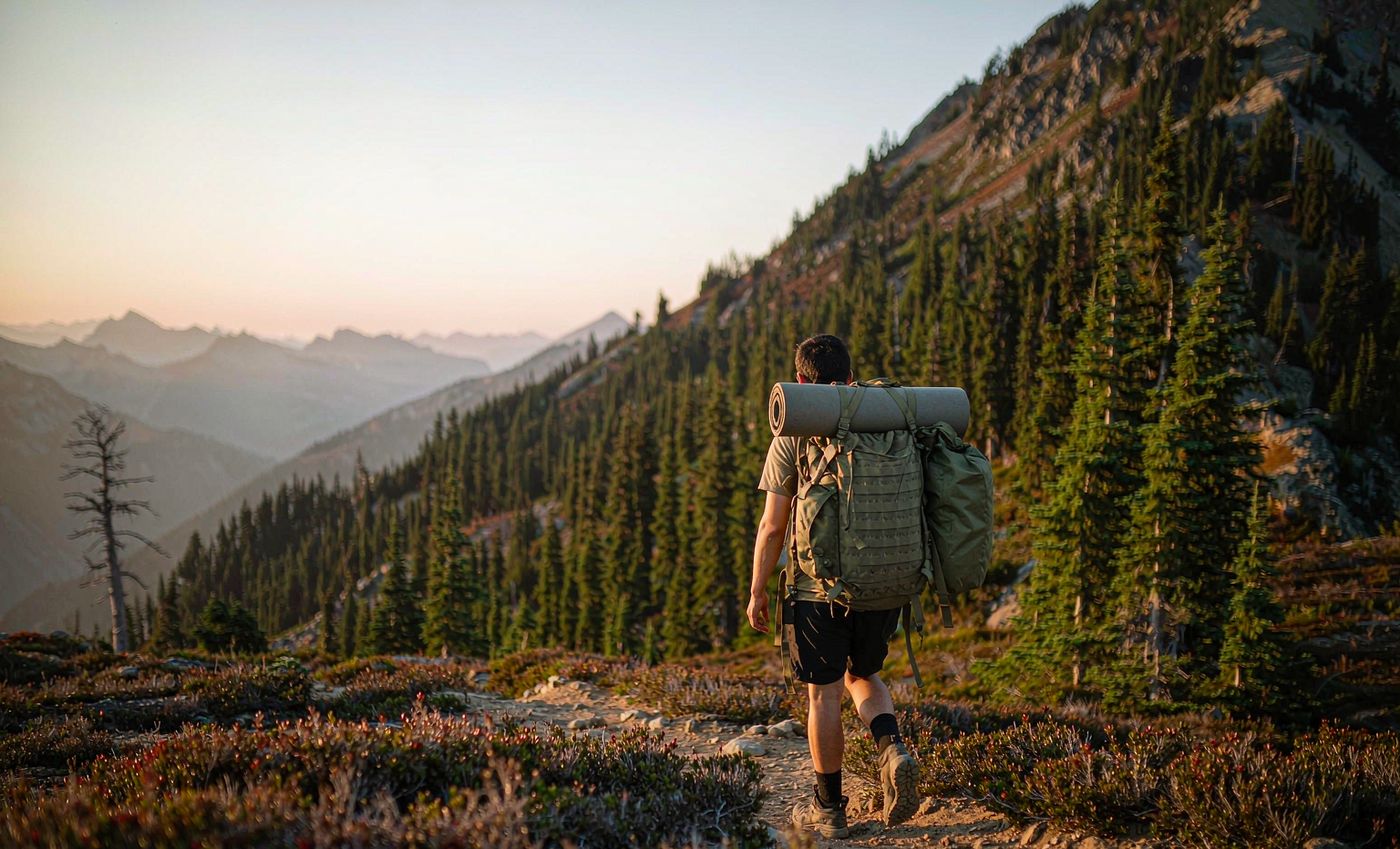
Capacity is the first filter buyers apply, and it drives fabric consumption, carton size and freight more than any other variable.
| Class | Volume | Typical user | Best for |
|---|---|---|---|
| Day pack | 15 to 25 L | Range users, urban commuters | Range programmes, EDC retail |
| 3-day pack | 30 to 40 L | Trainers, hikers, hunters | Core tactical retail volume point |
| Assault / expedition | 45 L and up | Extended patrols, expeditions | Duty contracts, specialist retail |
Most distributors anchor the range on a 35 L pack and add a smaller day pack and a larger expedition model around it. That is exactly how the tactical backpack line is structured.
Shell fabric: denier is not the whole story
Buyers ask for denier first, but coating and backing decide as much of the real-world performance.
| Fabric | Abrasion life | Weight | Cost | Suits |
|---|---|---|---|---|
| 600D ripstop polyester | Moderate | Light | Lowest | Entry retail, promotional programmes |
| 500D Cordura nylon | High | Medium | Mid | Duty, training, core retail — the default |
| 1000D Cordura nylon | Highest | Heavy | Top | Heavy-abuse contracts, premium lines |
| Laminated nylon / quiet shell | High | Light | Top | Hunting and photography programmes |
The Falcon 35L uses 500D Cordura with a DWR finish and a PU backing, lined in 210D hi-vis ripstop so contents are visible inside the main compartment. That combination is the volume default across most of our export orders.
Zips and hardware: where cheap packs fail
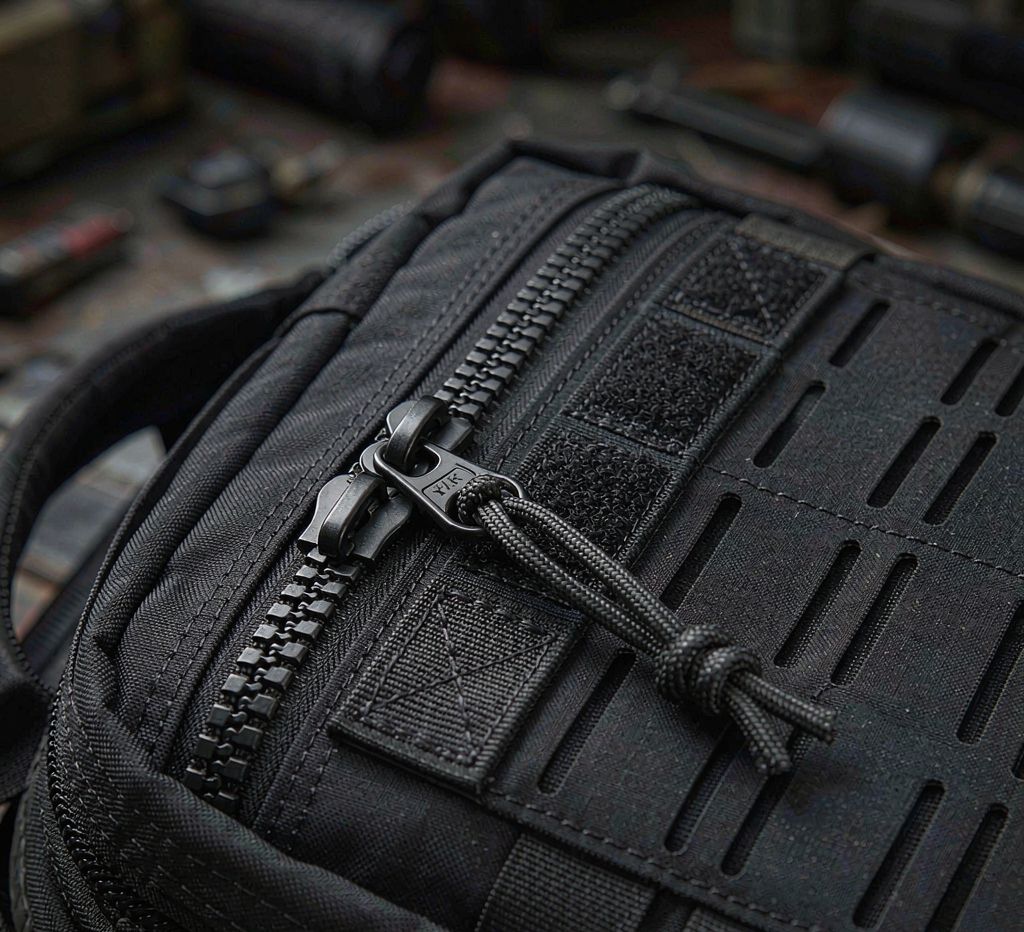
Main zip: YKK #10
Genuine YKK #10 on the main opening, #8 on secondary compartments. A #8 main zip is the single most common false economy on 30 L-plus packs.
Buckles
Duraflex, ITW or Woojin hardware from 100 pcs upward. Acetal for standard brackets, metal hardware for premium positioning.
Bar-tacks
Every strap anchor, zip end and handle root bar-tacked. On a loaded pack these points carry the whole weight, twice a day, for years.
MOLLE face
Laser-cut laminate keeps the face flat and light; sewn webbing reads more traditional. Both attach the same MOLLE pouches.
Harness and load control
Above 25 litres the harness decides whether the pack gets used or returned.
- S-curve shoulder straps: padded, sized to the user population, with adjustment off the shoulder so straps do not slip.
- Sternum strap: standard above 30 L; positions the load and stops strap roll.
- Hip belt: removable on multi-purpose packs so retail can sell it as a day pack too.
- Back panel: padded airflow channel; hydration sleeve behind it with dual exit ports.
The pack we build: Falcon 35L (WH-TB330)
| Spec | Value |
|---|---|
| Capacity | 35 L, 50 x 32 x 22 cm |
| Shell | 500D Cordura nylon, DWR finish, PU backing |
| Zips | Genuine YKK #10 main, #8 secondary |
| MOLLE | Laser-cut laminate, six rows |
| Hydration | 3 L sleeve, dual exit ports |
| Weight | 1.45 kg empty |
| Packing | 1 pc / polybag, 10 pcs / carton |
Full specifications and colourways are on the Falcon 35L product page. Colourway runs on stock colours from the MOQ; Pantone-matched dyeing opens up above 300 pcs.
Where these packs are built
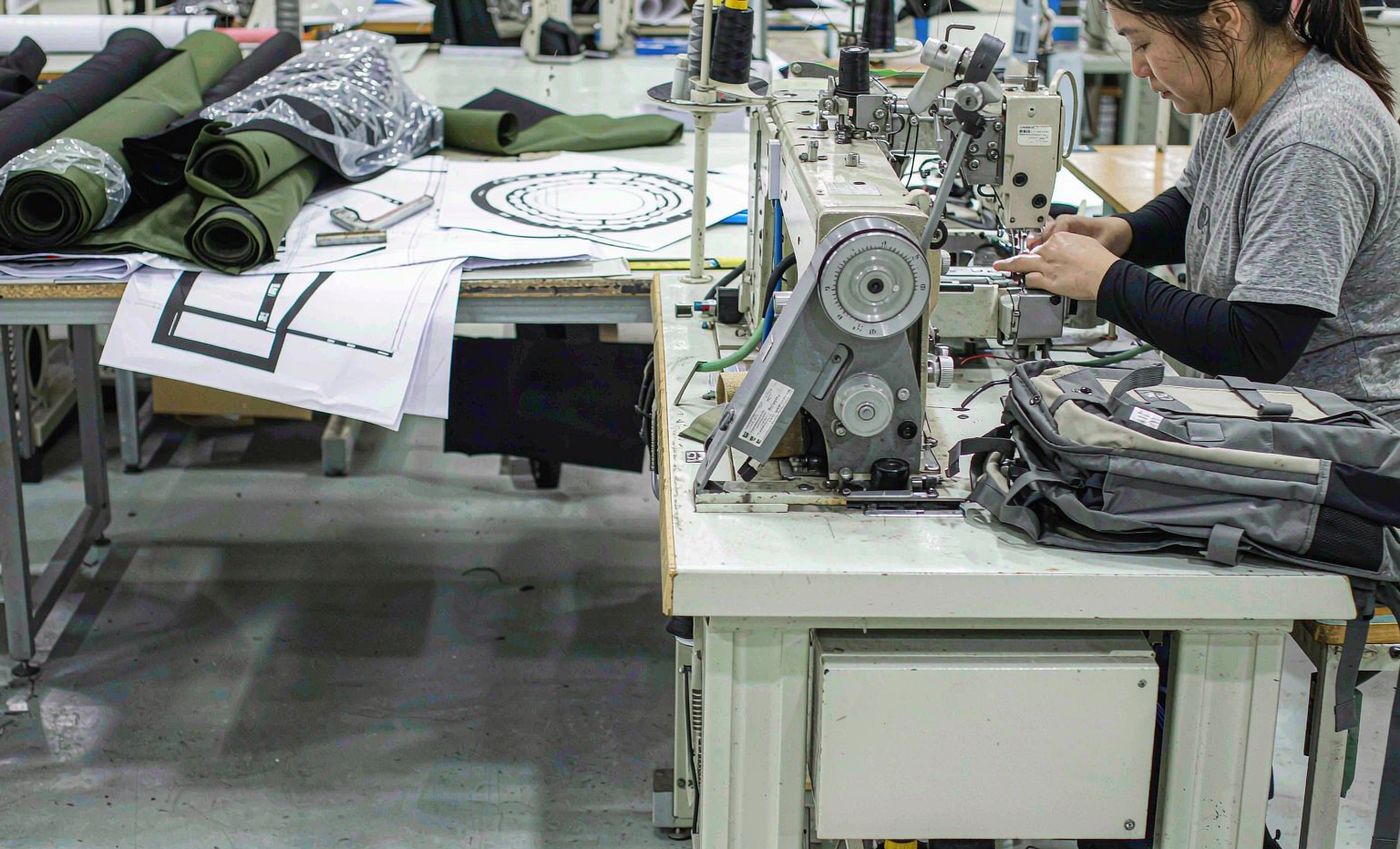
WildHawk Outdoor Products (www.wildhawkgear.com) builds the backpack line in-house in Huadu, Guangzhou. Because the Falcon 35L block already has tooling, samples come back in 48 hours; bulk runs in 15 to 25 working days. A final AQL inspection closes every order, with a photo and measurement report before balance payment.
From sample to bulk: the timeline
- 01
Specification
Capacity, fabric, zip set, MOLLE layout and branding confirmed in writing.
- 02
Sample
48 hours from existing tooling; a new pattern adds development time first.
- 03
Load test
Sample packed to working weight, harness and zip cycle checked, comments folded back.
- 04
Bulk production
15 to 25 working days: cutting, panel assembly, zip and hardware setting.
- 05
Inspection and packing
AQL final, measurement report, then polybags and cartons with your barcodes.
A first order lands 5 to 7 weeks from approval to FOB Guangzhou. Repeat orders on an existing block run straight to production.
Quality checkpoints to write into the purchase order
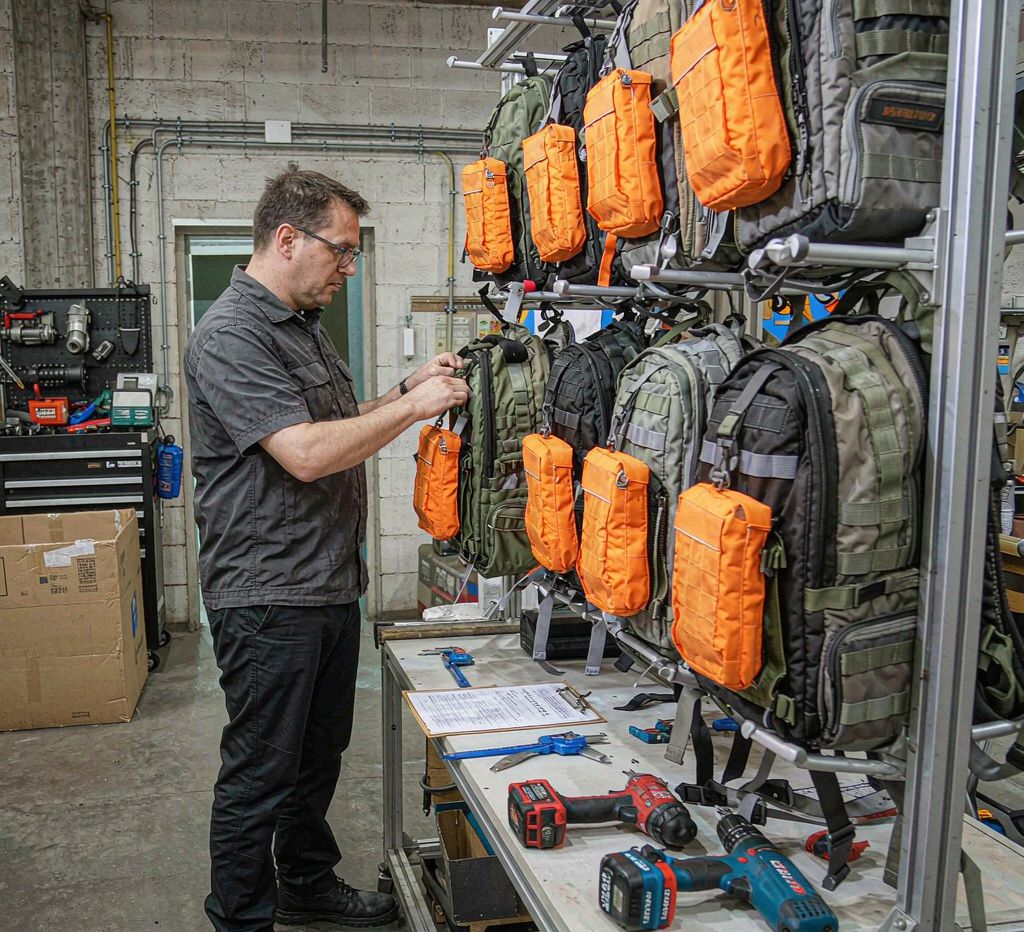
Five checks that prevent most claims
- Zip cycle test beyond 5,000 operations on the main zip, with the real pull and slider.
- Static load test: pack loaded to working weight, hung 24 hours, strap and stitch check after.
- Bar-tack audit on every strap anchor, zip end and handle root.
- Measurement check across the run against the approved sample, in writing.
- DWR and colourfastness check on the shell, especially for camouflage prints.
MOQ and what drives the price
Custom tactical backpacks start at 300 pieces per style. Below that, fabric dye lots and branded hardware minimums push the unit price out of market range.
Cost drivers
Capacity and fabric consumption, denier and coating, YKK vs generic zips, hardware brand, MOLLE construction and the number of compartments.
Branding
Woven labels, rubber PVC patches, embroidery and custom hangtags are all standard. Retail polybags with barcode and warning print can be supplied to your artwork.
Frequently asked questions
What is the best fabric for a tactical backpack?
500D Cordura nylon with a DWR finish and PU backing is the export default: high abrasion life at a medium weight and cost. Move to 1000D for heavy-abuse contracts, or a quiet laminated shell for hunting programmes.
Why does genuine YKK matter on a 35 L pack?
The main zip is the most stressed component on the pack. YKK #10 sliders and tape survive daily heavy use and cycle testing, and the YKK name itself is a quality signal retail buyers look for on the spec sheet.
What is the MOQ for a custom tactical backpack?
300 pieces per style. Sample orders run well below that — and on an existing block like the Falcon 35L, a branded sample comes back in 48 hours.
Can you match our Pantone colour?
Yes, above the dye-lot minimum. Stock colours — olive, black, coyote, ranger green — cover most programmes from the standard MOQ, so most buyers launch on stock colours and add Pantone matches from the second season.
Plan Your Tactical Backpack Programme with WildHawk
A tactical backpack programme comes down to capacity, shell fabric, zips and harness. Anchor the range on a 35 L 500D Cordura platform with genuine YKK #10 zips and a load-tested harness, write the five inspection points into the purchase order, and the same design can serve retail, duty and gifting channels with only colour and branding changes. Current pack specifications and colourways are published at www.wildhawkgear.com.