
Tactical Dog Vest OEM: MOLLE Rows, Sizing, Hardware and MOQ
A tactical dog vest is a load-bearing platform, not a piece of clothing. It carries pouches, a leash point and sometimes a tracking unit, and it has to stay put while the dog runs, jumps and pulls. For buyers sourcing OEM, the product is decided by four specifications: shell fabric, MOLLE layout, closure hardware and the size grade. Get those right and the vest works on a Malinois and on a German Shepherd without a redesign. The builds in this guide are produced by WildHawk Outdoor Products, the tactical gear factory behind www.wildhawkgear.com.
Quick answer: what OEM means for a dog vest
OEM means the vest is made to your pattern and your specification — your panel shape, your MOLLE rows, your buckle, your label. ODM means you start from a vest the factory already builds and adjust colour, logo and size range. Most first orders land in between: an existing block with modified rows, hardware and branding.
- Tactical Dog Vest vs Harness: What Separates the Two Builds
- MOLLE Vest Layout: How Many Rows Your Tactical Dog Vest Needs
- Closure Hardware: Side-Release vs Cobra Buckle on Custom Dog Vests
- Tactical Dog Vest Sizing and Grading for Working Breeds
- Four Tactical Dog Vest Builds from the WildHawk Factory
- OEM Timeline: From Dog Vest Sample to Bulk Production
- Quality Checkpoints to Write into Your Dog Vest Purchase Order
- Custom Tactical Dog Vest MOQ and Price Drivers
- Frequently Asked Questions
- Specify Your Tactical Dog Vest with WildHawk
Tactical Dog Vest vs Harness: What Separates the Two Builds
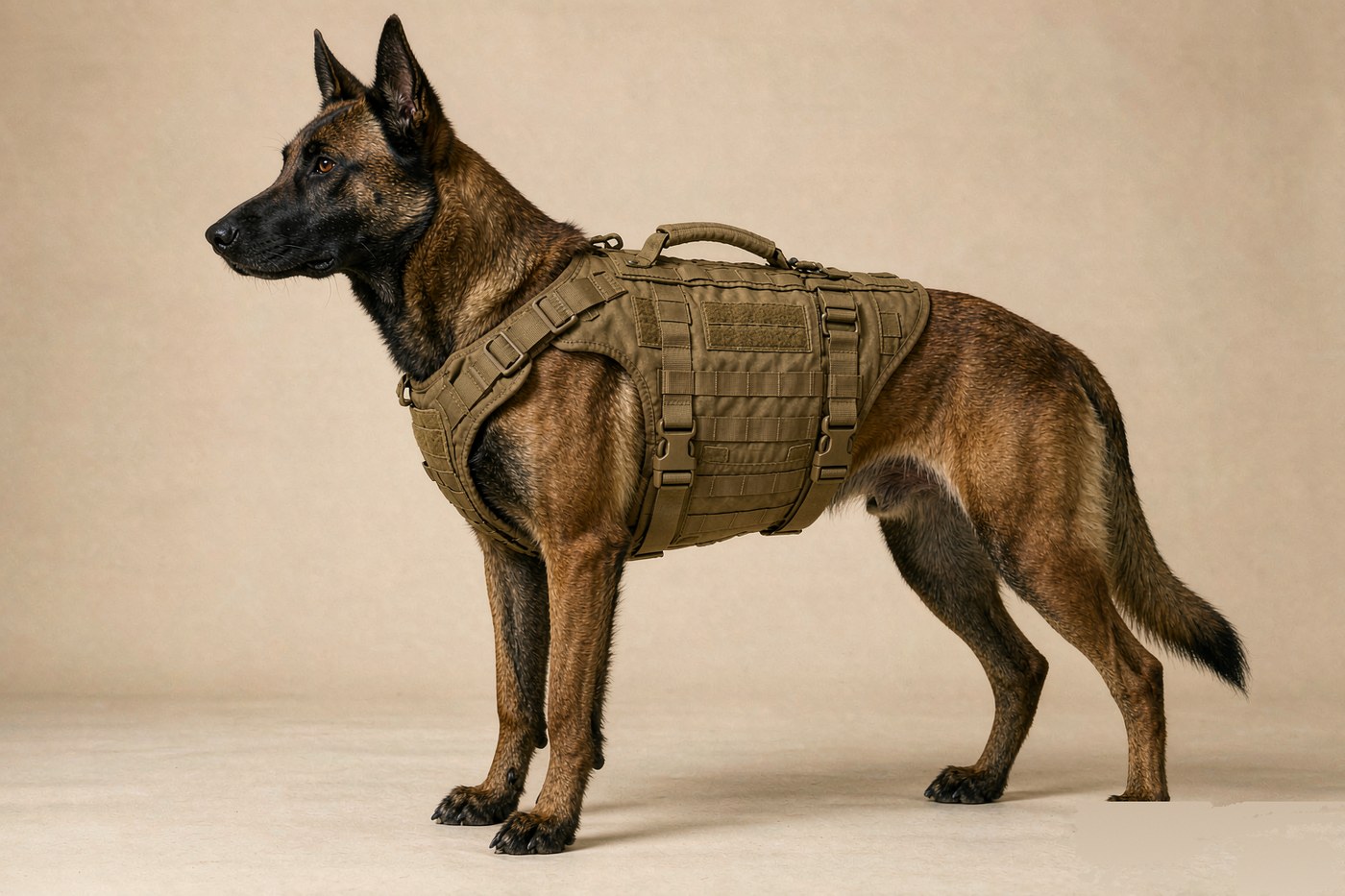
A harness distributes leash pressure. A vest carries gear. That difference changes the construction, and buyers who treat the two as the same product usually end up with a vest that sags at the middle once a pouch is attached.
Load-bearing panel
The body panel is a double-layer nylon shell with webbing rows stitched through both layers, so weight sits on the panel instead of pulling on the seams.
MOLLE / PALS rows
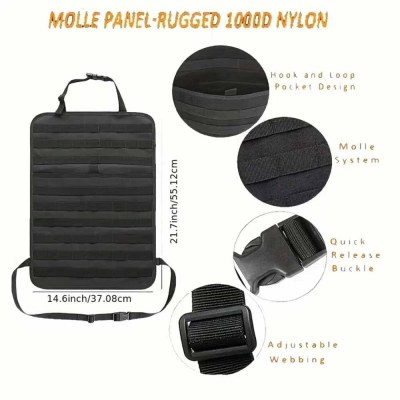
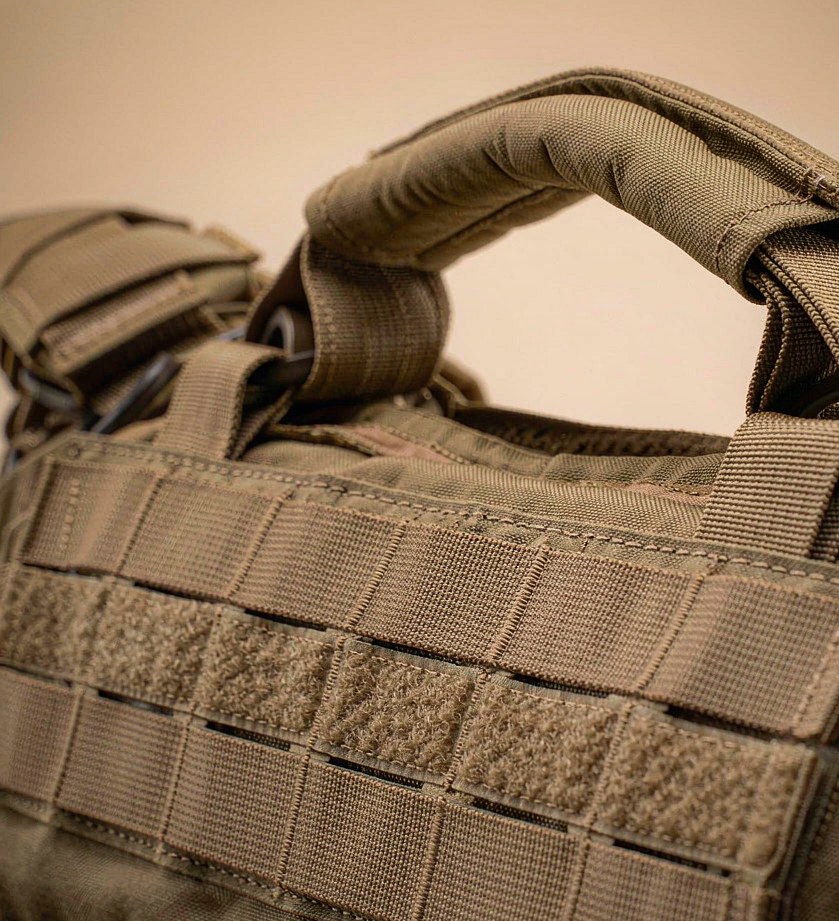
Pouch attachment needs webbing on a fixed grid, usually 25 mm webbing at 38 mm spacing, so standard pouches, patches and ID panels fit without adaptation.
Grab handle
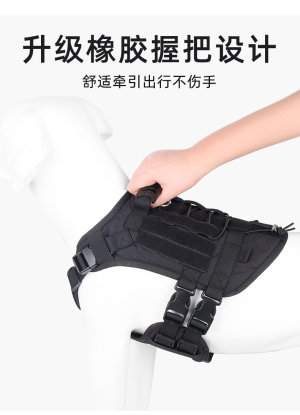
A reinforced handle over the back lets a handler lift or steady the dog. It is the highest-stress point on the vest and needs bar-tacks, not a single stitch line.
Close fit and padding
Padded chest and belly panels plus adjustable straps keep the load from swinging. Breathability matters here: a vest that traps heat will not be used in summer training.
MOLLE Vest Layout: How Many Rows Your Tactical Dog Vest Needs
Row count is the first specification to fix, because it determines panel size, fabric consumption and what the end user can carry. More rows is not automatically better — an oversized panel on a medium dog restricts the shoulder.
| Layout | What it carries | Typical dog | Best for |
|---|---|---|---|
| Single row | One small pouch or ID panel | Medium, 15 to 25 kg | Everyday walks, service-dog ID |
| Two rows | Two pouches plus patches | Medium to large, 20 to 40 kg | Training, patrol, hiking |
| Three rows and side panels | Full kit, radio, water | Large, 30 kg and above | Working K9, long deployments |
The full range of vest layouts we build sits in the tactical pet gear section, including a two-row MOLLE model and a cobra-buckle version. Comparing the panel sizes side by side is usually faster than describing them.
Closure Hardware: Side-Release vs Cobra Buckle on Custom Dog Vests
The buckle is where most buyer questions start, because it changes both the price and the positioning of the product.
Side-release buckle
Plastic, light, cheap to replace and familiar to end users. Standard choice for retail and training programmes, and the fastest to source in custom colours.
Cobra-style metal buckle
Metal quick-release, higher unit cost, stronger perceived value. Common on K9 and duty vests, and a common reason a retail line upgrades its top SKU.
Leash attachment
An aluminium or steel D-ring on the back panel, bar-tacked through both layers. Position decides whether the leash pulls the vest forward or keeps it centred.
Patch panel
Hook-and-loop panel for morale patches and ID. Size it to the patch format your market actually buys, not to whatever is left on the panel.
Tactical Dog Vest Sizing and Grading for Working Breeds
Dog vest sizing is not a scaled human size chart. Girth and back length do not grow at the same rate, and a deep-chested breed needs a different block from a long-backed one.
- Chest girth: the widest point behind the front legs. This is the measurement that most often causes returns.
- Back length: base of neck to base of tail, the figure customers recognise on a size chart.
- Chest depth and belly clearance: decides whether the front panel rubs the shoulder or the belly strap sits behind the ribcage.
- Neck opening: enough room for a collar underneath, not enough to let the vest rotate.
Practical approach: approve the size chart before sampling, then build the grade across three blocks — medium, large and oversized deep-chested. Sending three reference animals, or their measurements, removes most of the fit risk in one round.
Four Tactical Dog Vest Builds from the WildHawk Factory
| Model | Build | Closure | Sized for |
|---|---|---|---|
| WH-DVDR | Two-row MOLLE, grab handle, leash D-ring | Side-release | Training and patrol, custom sizes |
| WH-DV2 | MOLLE panel with handle, size and colour custom | Side-release | Retail and distributor ranges |
| WH-DVC | MOLLE body with metal cobra-style buckle | Cobra-style | Duty and premium retail |
| WH-DV3 | Vest plus matching gear as a set | Side-release | Gift and bundle programmes |
Where these vests are built
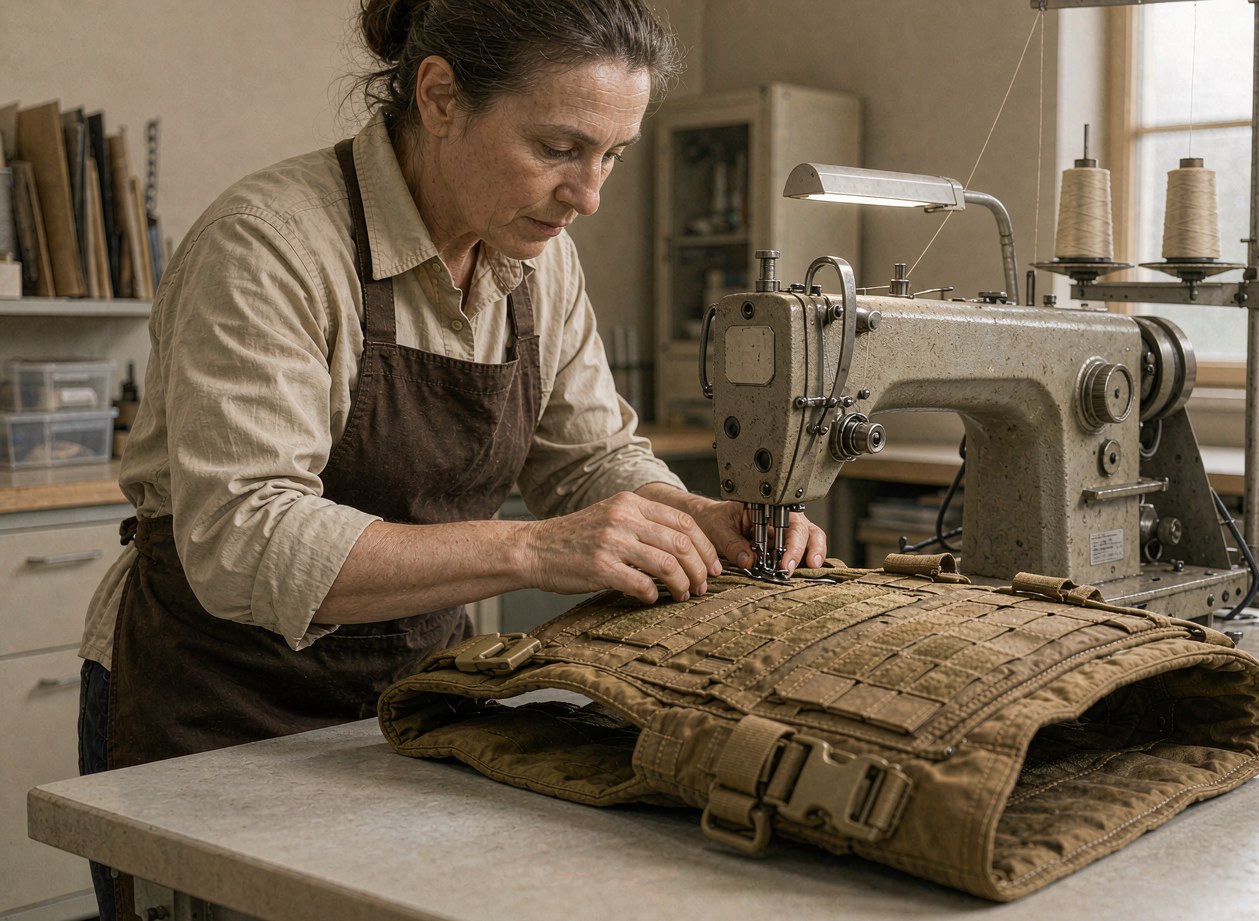
WildHawk Outdoor Products (www.wildhawkgear.com) sews the tactical pet gear line in its own workshop in Huadu, Guangzhou, alongside the plate carriers, load-bearing vests and packs. Samples come back in 3 to 5 working days, bulk runs in 15 to 25, and the pet gear line is inspected against the same standard as the carrier lines.
OEM Timeline: From Dog Vest Sample to Bulk Production
- 01
Specification and pattern
Panel shape, row count, hardware and label placement confirmed, then patterned and graded.
- 02
Sample
3 to 5 working days for a sample from an existing block; longer if the panel is new.
- 03
Fit and hardware check
Sample fitted on a real dog, buckle and D-ring load points checked, comments folded back into the pattern.
- 04
Bulk production
15 to 25 working days, cutting, webbing assembly, hardware setting and finishing.
- 05
Inspection and packing
Measurement check against the approved chart, then carton packing with your labels and hangtags.
Sampling runs in parallel with fabric and hardware sourcing, so a first order is usually 4 to 6 weeks from approval to shipment. Repeat orders skip development and go straight to production.
Quality Checkpoints to Write into Your Dog Vest Purchase Order
Five checks that prevent most claims
- Webbing stitch density and row spacing measured against the approved sample, not the drawing.
- Bar-tacks at the handle, D-ring anchor and both ends of every loaded webbing row.
- Buckle cycle test on the closure, plus a pull test on the assembled vest.
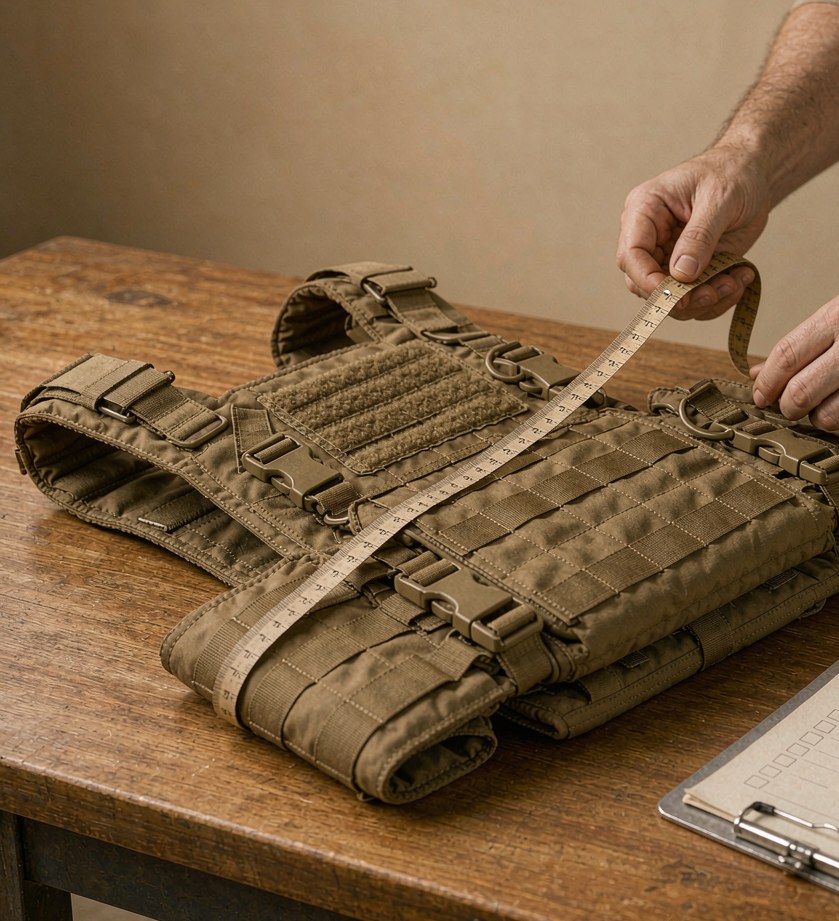
- Dimensional check across the full size run, with a written measurement report.
- Colourfastness and abrasion check on the shell, especially for camouflage prints.
Custom Tactical Dog Vest MOQ and Price Drivers
Custom tactical dog vests start at 500 pieces per style for production runs. Below that, hardware and webbing minimums usually make the unit price unrealistic rather than the labour.
Cost drivers
Shell denier and coating, row count and webbing length, buckle type, padding, print or camouflage, and how many sizes the run is split across.
Colour options
Black, khaki, army green and camouflage prints cover most markets. Custom colours need a dye lot minimum, which is the usual reason a new colour only makes sense at higher quantity.
Frequently asked questions
What fabric is used for a tactical dog vest?
Most builds use 800D nylon or a nylon Oxford weave with a water-repellent finish, with a lighter lining against the dog. Denier and coating are the two variables that decide abrasion resistance and cost.
Can the MOLLE rows be changed on an existing vest?
Yes. Row count, spacing and panel size are pattern changes, not new tooling, so a two-row vest can become a three-row version on the same block. It does change fabric consumption and unit cost.
What is the minimum order for a custom dog vest?
500 pieces per style for a production run. Sample orders are separate and can be placed well below that to approve fit and hardware.
Can you put our logo on the vest and the packaging?
Woven labels, rubber patches, printed webbing and custom hangtags are all possible. Send the artwork with the order quantity and the factory confirms which methods suit that volume.
Specify Your Tactical Dog Vest with WildHawk
A tactical dog vest is specified, not chosen from a catalogue. Fix the MOLLE layout against the job the dog does, choose the buckle for the price bracket, grade the size chart on real measurements, and lock the five inspection points into the purchase order. Everything else — sample time, unit cost, carton packing — follows from those four decisions. Current size charts, MOLLE layouts and hardware options for the WildHawk tactical pet gear line are published at www.wildhawkgear.com.